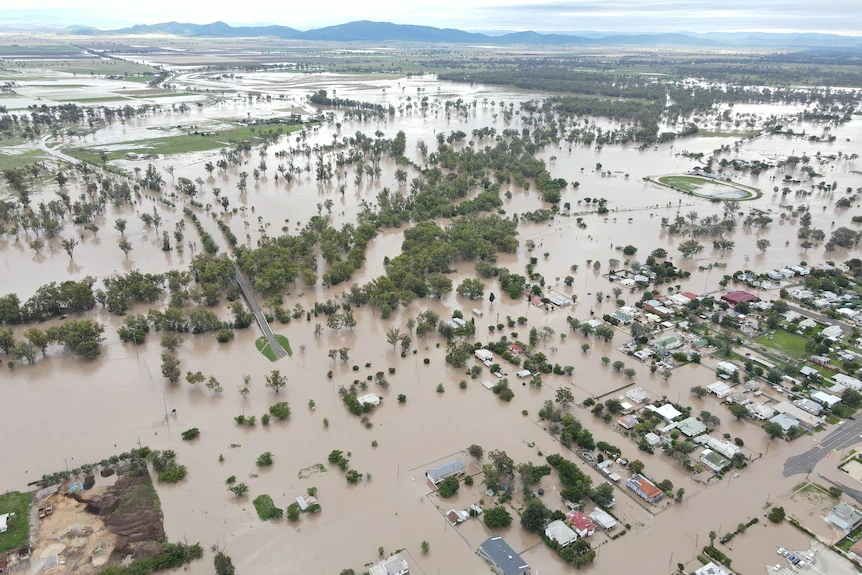
Widespread quality drops and considerable yield losses have been seen as unavoidable in winter crops all across New South Wales and Victoria as floodwater spreads in the major farmland regions of both states. With further rain expected, only crops on either the sloping eastern edge of the grainbelt, or the western edge spreading into Queensland are expected to escape the brunt of weather damage.
On the ground, farmers from Moree in far northern NSW to central Victoria are moving livestock and equipment to higher ground as communities and emergency services rally to protect property and relocate people at risk.
In the wettest regions in NSW and Victoria, wheat test weights will likely be affected as crops are showing signs of stripe and head rust, and conditions remain too wet to allow further applications of fungicide.
Inundated areas are now looking at some yield losses due to lodging, with plains country in the wider Moree and Narrabri regions hard hit.
However, bumper yields in Queensland, and hopes that at least half the crop will jag protein of 11 per cent plus, should help to offset the impact of low protein across NSW.
Summer crops planted on irrigated country with the ability to drain are expected to have a good chance of survival, but rain in the coming week could thwart recovery.
The flood peak in the Gwydir River has just passed in Moree, where more than 300 houses have been inundated and the clean-up is under way.
According to NSW Farmers, several agronomists have predicted the loss of at least 120,000 hectares of wheat in Moree, Narrabri and Walgett districts combined.
NSW Farmers Grains Committee chair Justin Everitt said some farmers were calling it a “wet drought”, and while it was unlikely, directly, to impact food prices in the short-term, there were a lot of growers who would be under pressure to try again next year.
“You spend all this money preparing your paddocks, sowing your crops, fertilising and spraying them, only to see them wiped out a couple weeks before harvest – it’s heartbreaking,” Mr Everitt said.
“If we don’t dry out soon, it will be financially disastrous for a lot of growers.”
Credit: https://www.beefcentral.com/news/crops-livestock-suffer-as-impact-of-deluge-spreads/