Inventia Genetic Technologies (IGT), the nation's longest-standing and largest provider of cattle IVF programs, has expanded into new, larger premises starting Monday.
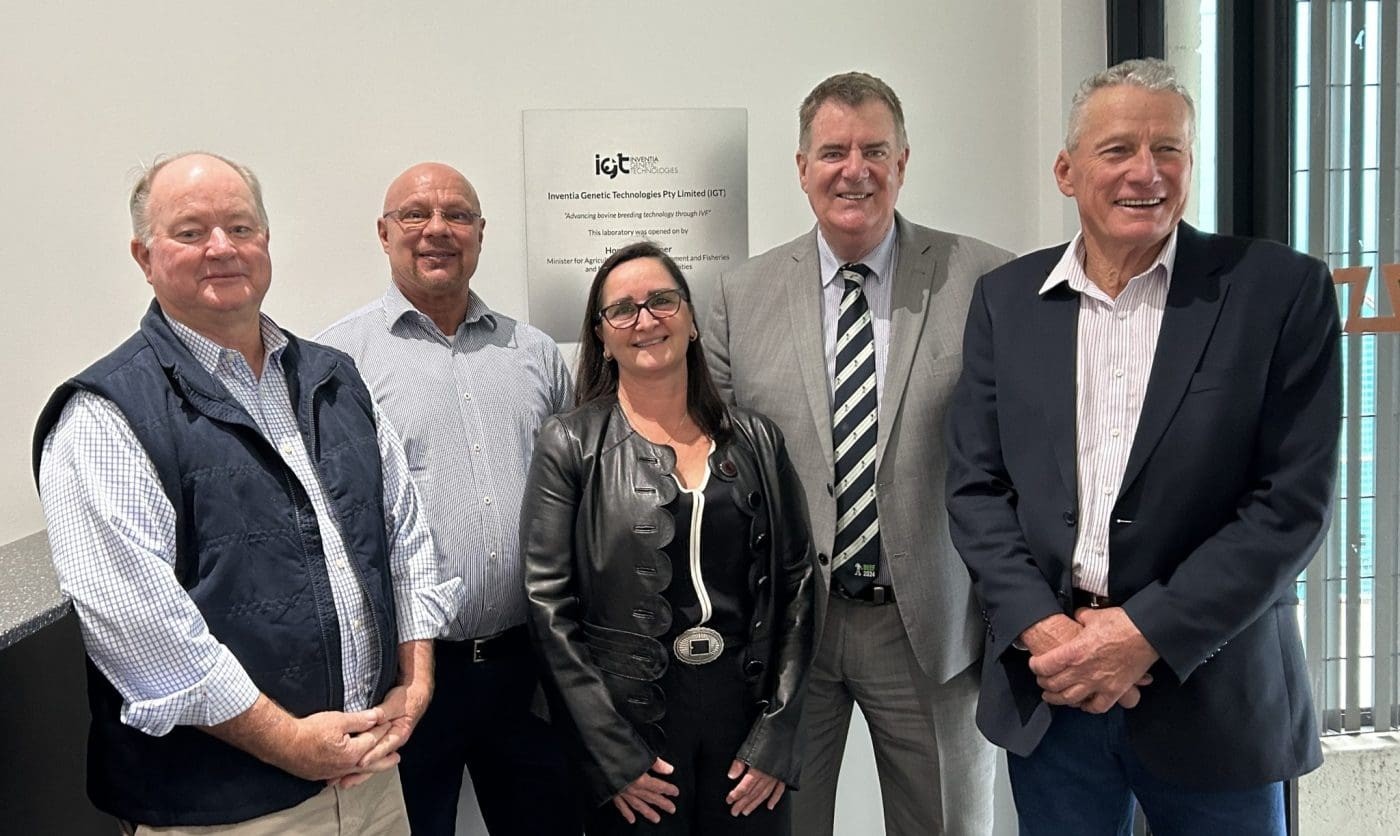
On Friday, the Brisbane-based biotech firm celebrated the move with a ribbon-cutting ceremony led by Queensland’s Minister for Agriculture, Mark Furner.
Ced Wise, Chair and co-owner of IGT, remarked, “This significant investment highlights our strong confidence in IVF technology. We believe in the future of IVF and the cattle industry.”
This expansion marks IGT's third growth phase since its founding in 2012. With over 20 employees now at their Brisbane and Rockhampton offices, many staff members come from South America, especially Brazil, known for its expertise in bovine IVF.
The company is supported by several co-owners, including breeding expert Ced Wise, David Foote, Dr. Julio Ribeiro, and Patricia Medina Porto. Chief Operating Officer Marcelo Stiaque shared that the primary focus is on Brahman cattle, followed by Angus, Ultrablacks, and recently, Wagyu. Although fewer eggs are obtained from Wagyu, the embryo conversion rate remains comparable to Bos indicus breeds.
The new facility features a dedicated R&D area, where IGT plans to introduce robots for standardized treatments and large-scale production. Marcelo mentioned the potential use of AI to predict successful oocytes for conversion. The R&D section will also explore new packaging, identification systems for embryos, and media for maintaining oocytes.
IGT is considering expanding to other species, such as horses, with an initial focus on polo ponies. The new lab includes a training room to enhance skills for existing staff and train new employees.
Ced Wise also discussed the integration of genomics with IVF. He highlighted the ability to biopsy and genetically manipulate embryos before implantation, noting that while technology is advancing faster than legislation, future regulations will eventually catch up.
Despite the potential of genetics and IVF, Ced expressed skepticism about their role in reducing ruminant emissions. He believes that achieving sustainability in agriculture will require collaboration with breeders to maximize genetic efficiency and profitability.
The passage notes that modern IVF, which began in the early 2000s, has rapidly advanced compared to other methods like MOET (Multiple Ovulation Embryo Transfer). IVF is favored due to its efficiency and minimal disruption to the donor cow’s reproductive cycle.
Dr. Julio Ribeiro, IGT’s founder, sees potential for expanding the technology to South Asia, India, Indonesia, and Malaysia, but the immediate focus remains on domestic customers. Recent service expansions include Western Australia.
The launch event was attended by long-term clients, including David Bondfield, who has used IVF for the Palgrove herds for over a decade, and Alan and Debbie Marshall from Karakara, who have utilized the IVF program for their Angus and Ultrablack herds.
Other guests included Suzie Lockwood from the Superb Speckle Park stud and Jennie Coldham from Coldwood Pastoral, which runs a contract recipient herd of Angus cattle. Dairy clients Joe Bradley and Christina Smith from Malanda Dairy also attended, highlighting their successful use of IVF for producing predominantly heifer calves.
How IVF Works:
- Field technicians collect oocytes (eggs) from donor cattle.
- The oocytes are identified, counted, and graded in the field before being transported to the lab.
- Selected semen fertilizes the oocytes within 24 hours of collection.
- Fertilized oocytes are cultured in specialized media under strict lab biosecurity.
- After seven days, embryos are graded and evaluated.
- High-quality embryos are either used immediately or frozen for future use.
Source: https://www.beefcentral.com/genetics/nations-oldest-and-largest-company-offering-cattle-ivf-programs-expands/