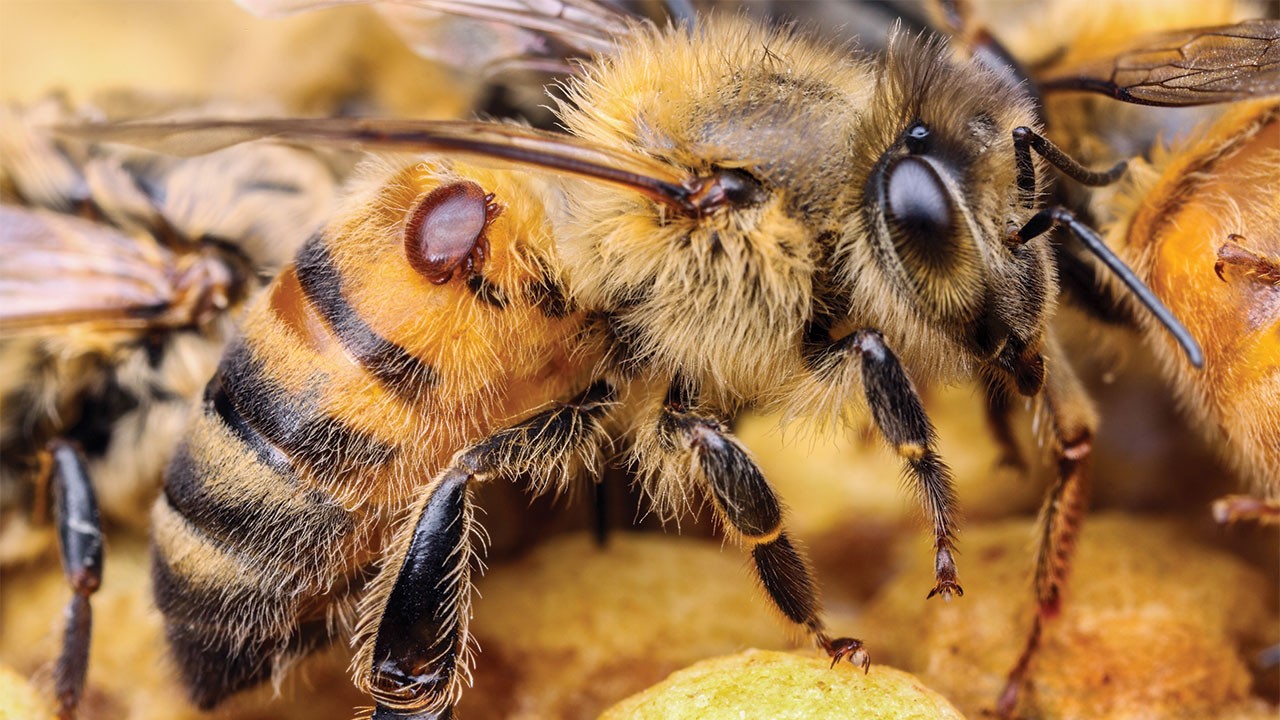
Bee hives will be destroyed on the mid-north coast of New South Wales after the damaging varroa mite was discovered for the first time in Kempsey.
According to the NSW Department of Primary Industries (DPI), a beekeeper discovered two mites during a mandatory 16-week alcohol wash over the weekend.
"We were able to have our crews out there first thing Monday morning to check the apiary where, sadly, they did find another mite," said deputy incident controller Shannon Mulholland.
Dr Mulholland says the beekeeper has not recently moved his hives, and the infection's source is unknown.
She claims that the infected hives will be destroyed, and that the DPI is collaborating with other apiarists in the eradication zone.
"Both commercial and recreational beekeepers will be impacted by the zone," Dr Mulholland said.
The discovery has raised concerns in the industry that containment efforts are failing.
According to Steve Fuller, President of the Crop Pollination Association of Australia, the discovery comes at a time when bees are being relocated for pollination services.
"[At] this time of the year, there's a lot of beekeepers going down to the almonds, there's also beekeepers [that] have gone over west towards the canola," he said.
Mr Fuller has called on authorities and the NSW Agriculture Minister to re-evaluate their eradication strategy.
"How many trigger points are we going to break before we actually start talking about Plan B?" he said.
Mr Fuller said that with the euthanising of more hives, people in the industry are questioning their future.
Daniel Costa has been running Costa Honey for the past 23 years, wholesale and retailing his own branded honey in the Kempsey area.
While approximately 240 of his 750 hives are in the purple surveillance zone, the business's shed, which houses all beekeeping tools, is in the red eradication zone and cannot be accessed.
"We have four loads in Griffith doing almond pollination at the moment. We can't get gear to those loads," Mr Costa said.
"We're just in limbo at this stage."
Mr Costa said he and friends in the local industry have been struggling to come to terms with the news.
"We're actually devastated. [We] don't know where to start," he said.
Despite the latest detection, the NSW DPI is still confident total eradication is possible.
"That is still the plan and the primary strategy [and] whilst the new detection is disappointing, it's also not unexpected," Ms Mulholland said.
"We're putting a lot of effort into our tracing and investigations teams to understand how the mites got to Kempsey, and we will be releasing more information on that in the coming days and weeks."
NSW Agriculture Minister Tara Moriarty said the government remained committed to eradicating the mite.
"'I'm very sorry for the keeper that's found this mite in their bees in Kempsey, but the process is the same as it has been everywhere else," she said.
"We need to continue to focus our work on eradication."
The new case brings the total number of infected premises to 202 since the varroa mite was discovered at the Port of Newcastle last June.
(Source: ABC News )