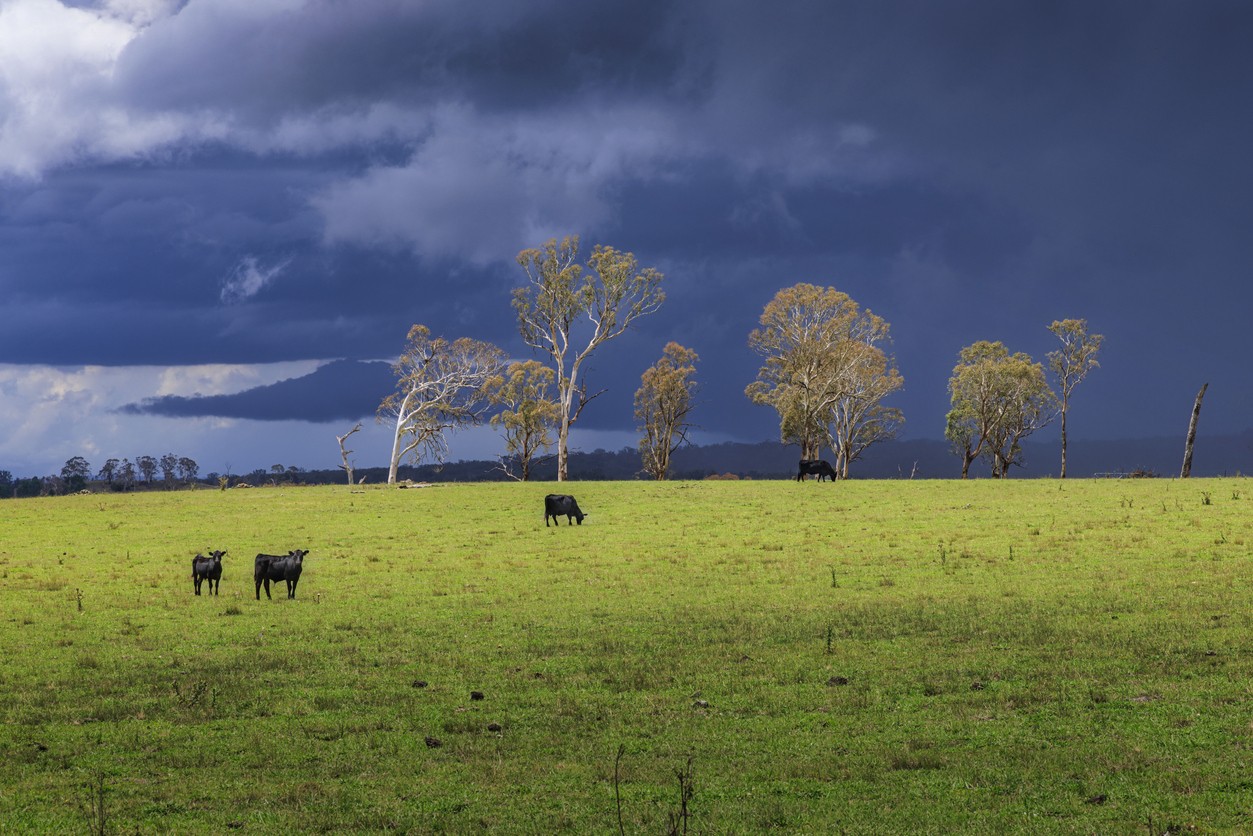
After months dominated by dry forecasts and looming concerns over a Super El Niño, recent rainfall across eastern grazing regions has
completely flipped the script and we can't deny, it's put a smile on our faces.
Paddocks are greening up, and instead of rushing cattle through the gates, producers across NSW might be making the strategic call to hold
stock back, add weight, and target early 2027.
But as paddocks green up, the flow of cattle into processing channels has hit a sudden bottleneck.
Department of Agriculture, Fisheries and Forestry (DAFF) trade data for October reveals national beef exports landed at 128,836 tonnes (a 3%
drop from September and an 8% decline compared to October last year.) While initial projections suggested the final quarter of 2026 would
deliver record processing and export throughput, the traditional winter lull has extended deep into spring. Weekly national processing
numbers dipped to just over 140,000+ head in late October, signaling one of the lowest non-holiday production weeks of the year.
With processing chains set to close for the season in mid-December, full-year export volumes are now expected to sit just above 1.5 million
tonnes, falling short of Meat & Livestock Australia’s earlier 1.646 million tonne forecast, though still marking a robust performance
year-to-date.
So what does this look like for NSW producers?
For New South Wales producers, recent rainfall has fundamentally altered short-term strategy, replacing the urgency to turn off stock with
decision-making power:
Rainfall across North West NSW and broader central regions has provided crucial soil moisture and pasture growth. Rather than rushing
cattle through saleyards during a seasonal dip, producers are opting to carry stock over to add weight, heading into 2027 in a position of
strength.
As producers hold onto stock, restocker interest has strengthened. Lightweight steers and heifers are seeing renewed buyer competition,
giving local backgrounders and breeders clear incentives to retain light cattle.
With processing plants winding down operations by mid-December, the immediate turn-off window is tight. Producers planning stock movements
must balance pre-Christmas yarding availability with what is shaping up to be an aggressive start to 2027 processing.
Global export snapshot
The rain-induced dip in Australian supply coincides with dynamic shifts across primary export destinations:
Year-to-Date (YTD) Volume
Record Highs: The US remains Australia’s top destination, absorbing displaced product as the US cattle herd sits at
70-year lows.
10,852 t (+4,000t vs Sep)
Tariff Pressure: Heavily impacted by the 55% tariff active through Dec 31. Low current volumes are expected to yield to
record airfreight and sea shipments in Jan 2027 when the 206,000t tariff-free quota resets.
22,796 t (-15% vs Oct 25)
Steady Demand: Solid year-to-date growth despite a minor month-on-month slowdown in October.
223,916 t (Significant YTD Gain)
Consistent Intake: Up over 40,000t on last year’s pace, filling market share amid reduced US supply.
Emerging Growth: Strong ongoing demand for Australian lean product.
Solid Expansion: Consistent growth across nine regional trade markets.
FTA Momentum: Sustained year-to-date growth following tariff-free access improvements.
The current market pause highlights the natural ebb and flow of Australia’s beef industry. Moisture in the ground changes more than just
pasture it shifts market psychology.
While temporary export declines might read as a slowdown on paper, for NSW cattle operations it represents a valuable window to regain
control over weight gains, timing, and turn-off strategies. As 2027 approaches bringing with it the reset of international import quotas and
renewed processing capacity, producers who use this wet stretch to position their herds thoughtfully stand well-placed for the turn of the
year.