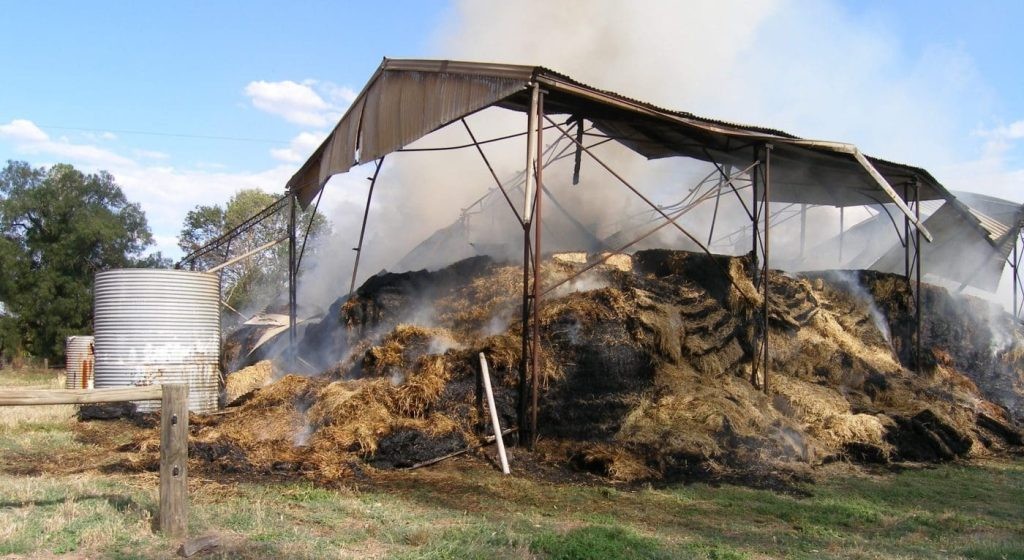
Damp conditions followed by heat create the perfect environment for hay heating and spontaneous combustion, a risk that can turn costly and dangerous very quickly.
Unlike fires caused by lightning or machinery, hay fires from spontaneous combustion start deep inside the stack, often smouldering undetected for days or even weeks before erupting into flames. By the time smoke is visible, serious damage may already be underway.
How Spontaneous Combustion Occurs
Hay is an organic material rich in sugars, proteins and moisture which are ideal conditions for microbial activity. When hay is baled too wet or stacked before it has properly cured, bacteria and fungi begin to break down the plant matter. This process generates heat. If that heat can’t escape, temperatures continue to rise until ignition occurs.
Key risk factors to watch for
- High moisture content: Hay baled above 20% moisture is at risk. Mould growth and fermentation commonly occur between 20–35%.
- Dense packing: Tightly stacked bales trap heat and moisture.
- Poor ventilation: Limited airflow prevents heat from dispersing.
- Environmental conditions: Warm, humid weather following rain.
- Storage practices: Enclosed sheds or barns without temperature monitoring.
Warning signs inside your haystack
Early detection is crucial and you should regularly inspect your stacks for:
- Steam rising from the hay
- Musty, caramel, or tobacco-like smells
- Visible mould on or within bales
- Condensation or corrosion on roofing and steel
- Slumping or deformation of the stack
A simple test is to insert a metal rod or crowbar deep into the stack. If it feels hot when removed, internal heating is already underway and immediate action is required.
How to reduce the risk of hay fires
1. Cure hay thoroughly before baling
Test moisture levels using a moisture meter. Ideal moisture levels are:
- Small square bales: 18–20%
- Large square bales: 12–15%
- Round bales: 15–18%
Also check plant nodes and leaf sheaths for hidden moisture.
2. Monitor internal stack temperatures
Use temperature probes or wireless sensors.
- At 55°C – monitor closely
- At 71°C – separate bales immediately and improve ventilation
3. Improve Airflow
Store hay in well-ventilated areas and avoid tight stacking.
4. Isolate Risky Bales
Store damp or suspect bales separately and away from dry hay.
5. Limit Stack Size
Smaller stacks reduce heat build-up. Leave clear gaps between stacks and walls.
6. Protect Hay from External Moisture
Maintain roofs, gutters and drainage. If storing outdoors, use breathable tarps.
7. Use Modern Monitoring Technology
Real-time temperature and humidity sensors can provide early warning and prevent losses before fires start.
A timely reminder for the season ahead
With moisture still lingering in hay after recent rains and heat on the way, conditions are now high-risk for hay heating. Taking a few minutes of checking each day could prevent the loss of thousands of dollars in feed and avoid serious safety hazards for people, stock and infrastructure.
Image source: Beef Central