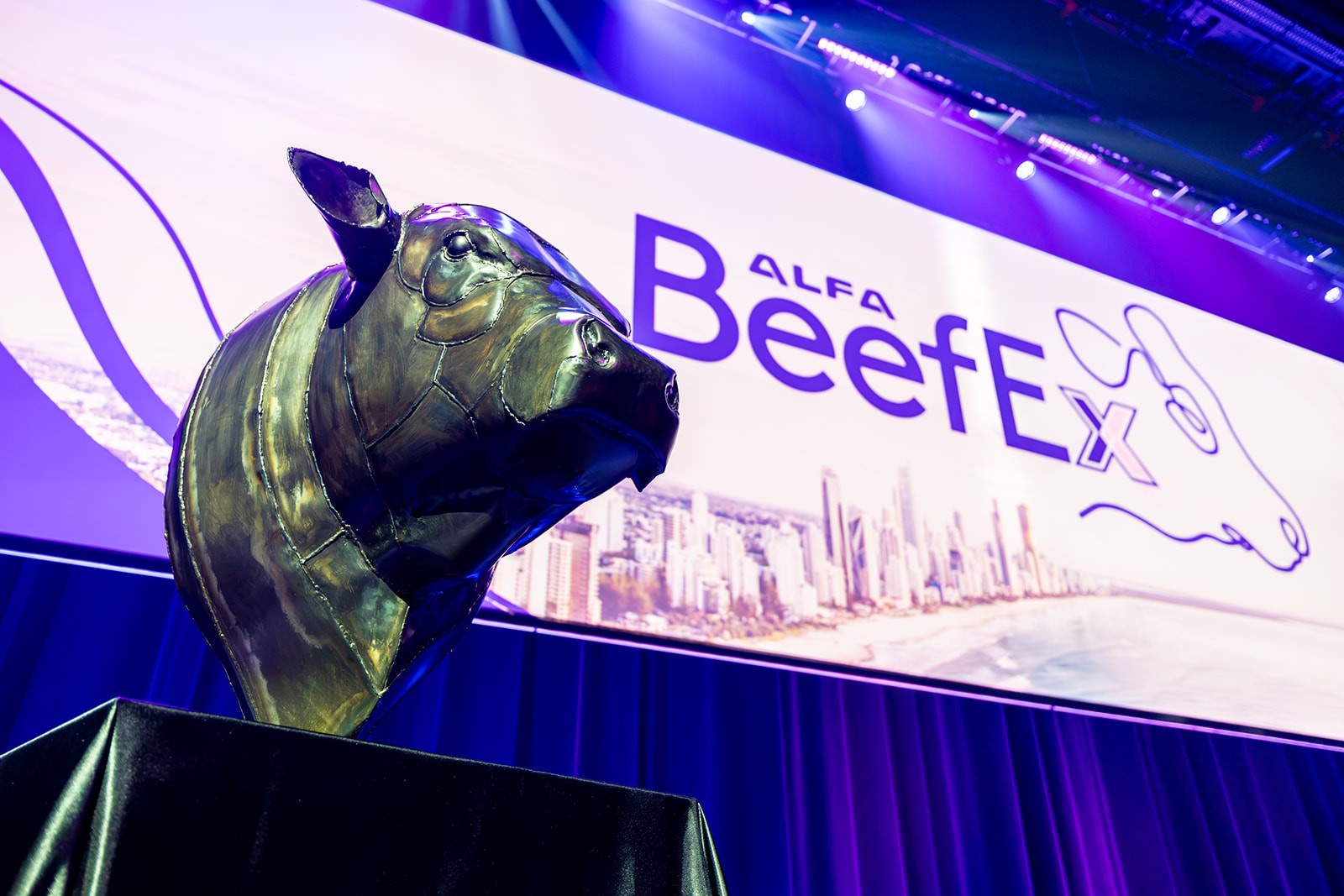
Off the back of last week’s update on the El Niño declaring itself, RaboResearch general manager Stefan Vogel dropped some serious insights
at Ekka Beef Week in Brisbane early August. His core message? Australia’s cattle market over the coming months is going to be driven by two
big factors: Weather and War.
While international headlines might feel a world away from our paddocks of regional NSW, geopolitical shifts and global weather
patterns have a very real knock-on effect on local gate prices, input costs, and global demand we have already seen.
Here is what local producers in our region should keep on their radar, along with where the big opportunities lie.
1. Why fertiliser and diesel remain high
The ongoing conflicts in the Middle East and Ukraine continue to put pressure on global trade routes, especially through vital shipping
passages like the Strait of Hormuz, where roughly 25% of the world’s urea moves.
-
Fertiliser: Global prices for urea dropped after initial spikes, but Australian prices have stayed roughly 30% to 40%
higher as local suppliers work through high-cost inventory. Expect phosphate and sulphur prices to remain elevated until global shipping
lanes fully clear up.
-
Diesel: With over 80% of Australia's diesel imported from Asian refineries, local producers are paying more at the pump
compared to competitors in the US, Europe, or Brazil, who enjoy stronger domestic fuel security.
The takeaway: Freight and input costs will require tight budgeting for the foreseeable future. Planning ahead for crop and
pasture inputs will be crucial to keeping overheads managed.
2. Grain prices & feedlot calculations
Weather and war are also pulling the levers on the grain market, which directly impacts feedlot buyers looking for local stock.
Patchy conditions across parts of NSW and Queensland, coupled with uncertainty around how hard the El Niño will bite before harvest, mean
domestic grain supplies are being watched closely. Globally, heatwaves in Europe, dry spells in the US Midwest, and restricted grain
shipping out of the Black Sea region are keeping global grain prices firm.
3. Great to see global demand for Aussie beef is sky-high
It’s not all headwinds and pressures the global appetite for Australian beef is as strong as ever, and Aussie producers are in a prime
position to take advantage of it.
-
Global Supply Shortfall: Total global beef supply is predicted to slightly decline over the next 18 months, with major
players like Brazil producing less and the US herd rebuild progressing slowly.
-
US Market Strength: Australia has emerged as the number one beef exporter to the United States. US demand is expected to
stay robust for the rest of this year and well into the coming years.
Surprising new demand drivers:
-
The High-Protein Trend: The rapid rise of weight-loss drugs (like GLP-1/Ozempic) globally is unexpectedly boosting red meat
consumption. Because these treatments require higher protein intake to prevent muscle loss, consumers and often their entire households are
turning to lean, high-quality proteins like Australian beef.
-
Policy Shifts Overseas: Updates to US dietary guidelines and food programs (military, hospitals, and schools) continue to
put red meat back at the center of the plate.
So what does this means for local producers
While local weather runs its course and global input costs stay elevated, the fundamental underlying demand for Aussie protein isn't going
anywhere. Australian beef remains a premium, trusted product on the world stage, and our market position is solid.
Keep an eye on input overheads, stay flexible with feed management, and lean into the fact that the world wants what regional NSW produces
best.