What we can do on a local level to support this!
It’s easy for those of us living and working on the land across the Gunnedah and North West region to take our lifestyle for granted.
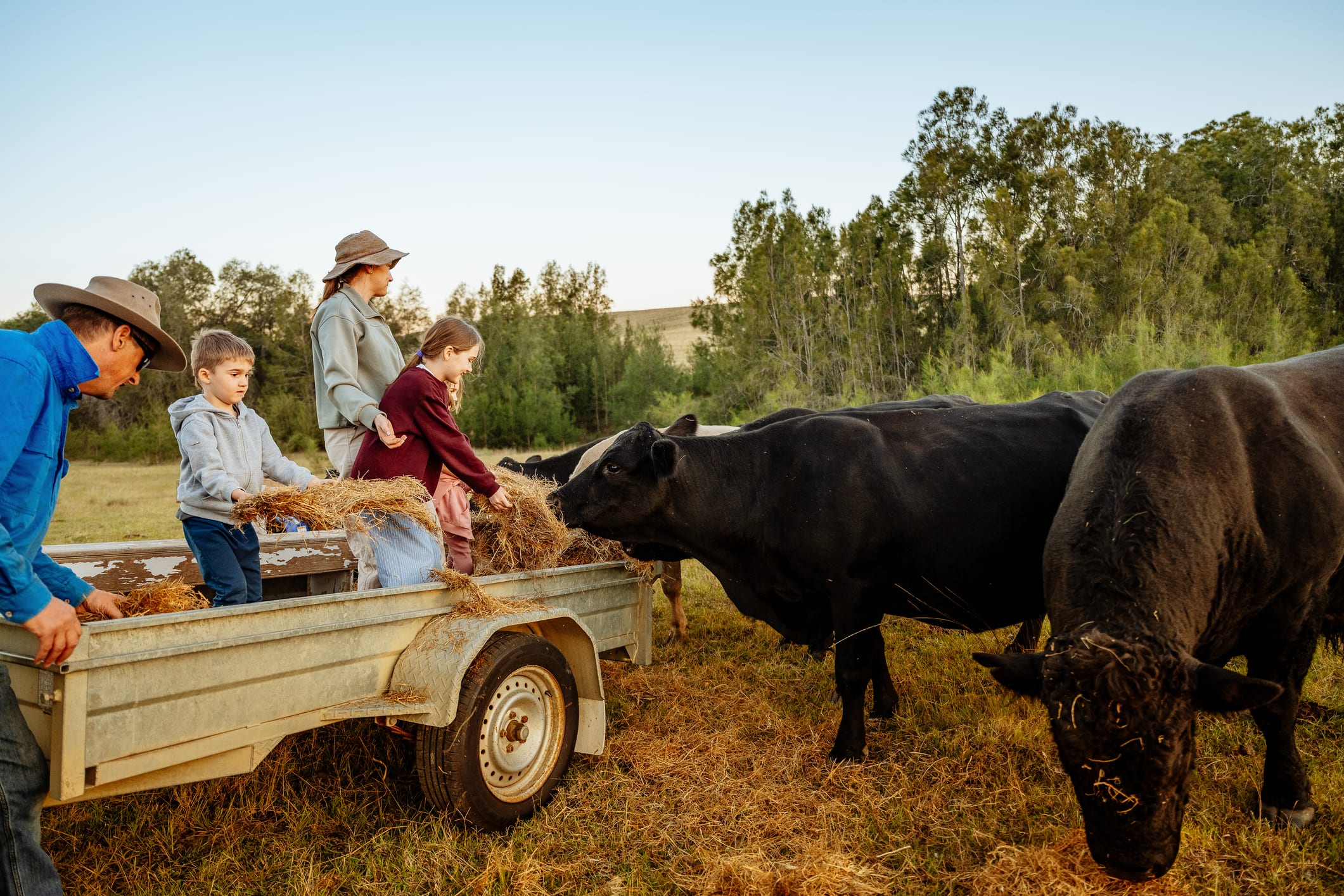
Our kids grow up with dirt on their boots, learning the natural rhythm of the seasons, handling stock, and understanding where their food
comes from before they even start primary school. Having gone through Farrer Memorial Agricultural High School in Tamworth myself, and now
gearing up for my oldest son to start at Farrer next year, with his two younger brothers hopefully following close behind, our family is
constantly immersed in the rural way of life.
However, step outside our regional bubble, and the disconnect between everyday consumers and the farm gate is wider than ever. For many
children growing up in suburban and urban centers, milk comes from a plastic bottle and beef comes from a plastic shrinkwrap tray, with
very little awareness of the hard work, animal welfare, and land stewardship happening behind the scenes.
This widening divide is precisely what North Queensland beef producer Michelle Lyons set out to address through her Rabobank-supported
Nuffield scholarship. Her research examines how hands-on, immersive farm experiences for school students can strengthen the red
meat industry's social licence and build lasting trust with future consumers.
Exploring successful educational frameworks across the Netherlands, Ireland, Scotland, and England, Michelle observed that opening farm
gates to students delivers educational and wellbeing benefits that extend far beyond basic ag science. Initiatives connecting
classrooms directly with working properties, whether through recurring farm visits or live digital programs like 'Farmer Time' give kids an
authentic appreciation for food production, natural resource management, and everyday rural life.
A central takeaway from her global research is that the most effective programs aren't simple, one-off field trips. Instead, they
rely on long-term relationships established between local schools, communities, and livestock producers. Furthermore, getting
students outdoors into practical farming environments frequently engages kids who otherwise struggle in traditional classroom settings.
As Michelle highlights, today’s school students are tomorrow’s primary consumers. Building trust and understanding in Australian
livestock production requires showing the next generation firsthand what modern, sustainable agriculture actually looks like.
'%3E%3Crect x='0' y='0' width='1024' height='680' fill='%237a725b'/%3E%3Cg transform='scale(4.00) translate(0.5 0.5)'%3E%3Cg transform='translate(124.01 0.00) rotate(350.56) scale(185.68 49.37)'%3E%3Cellipse fill='%23ffffff' fill-opacity='0.50' cx='0' cy='0' rx='1' ry='1'/%3E%3C/g%3E%3Cg transform='translate(198.75 114.40) rotate(231.38) scale(82.03 101.96)'%3E%3Cellipse fill='%231c0300' fill-opacity='0.50' cx='0' cy='0' rx='1' ry='1'/%3E%3C/g%3E%3Cg transform='translate(78.10 21.99) rotate(361.82) scale(97.16 37.56)'%3E%3Cellipse fill='%23edffff' fill-opacity='0.50' cx='0' cy='0' rx='1' ry='1'/%3E%3C/g%3E%3Cellipse fill='%23653000' fill-opacity='0.50' cx='141' cy='156' rx='179' ry='21'/%3E%3Cg transform='translate(215.73 114.88) rotate(14.77) scale(149.95 21.80)'%3E%3Cellipse fill='%23010000' fill-opacity='0.50' cx='0' cy='0' rx='1' ry='1'/%3E%3C/g%3E%3Cg transform='translate(123.12 143.21) rotate(225.40) scale(132.67 23.73)'%3E%3Cellipse fill='%23a47437' fill-opacity='0.50' cx='0' cy='0' rx='1' ry='1'/%3E%3C/g%3E%3Cpolygon fill='%23818832' fill-opacity='0.50' points='271,65 113,84 145,37'/%3E%3Cg transform='translate(205.49 9.95) rotate(180.93) scale(137.55 12.26)'%3E%3Cellipse fill='%23c2f5ff' fill-opacity='0.50' cx='0' cy='0' rx='1' ry='1'/%3E%3C/g%3E%3Cg transform='translate(0 89) rotate(12) scale(24 58)'%3E%3Crect fill='%23004dce' fill-opacity='0.50' x='-0.5' y='-0.5' width='1' height='1'/%3E%3C/g%3E%3Cg transform='translate(40.09 131.89) rotate(250.30) scale(14.43 32.72)'%3E%3Cellipse fill='%23e6c477' fill-opacity='0.50' cx='0' cy='0' rx='1' ry='1'/%3E%3C/g%3E%3C/g%3E%3C/g%3E%3C/svg%3E)
So, what can we do on a local level to support this effort?
While local educational institutions like Farrer do an exceptional job championing agricultural education in our backyard, there is a
broader role for local producers and ag businesses to play. Whether it means opening gates for a local school visit, hosting a community
field day, or taking the time to share our daily realities with non-farming friends, every conversation helps bridge the gap.
Protecting the future of Australian agriculture starts with education.
By working together to give more young people a taste of life on the land, we aren't just building social licence, we're inspiring the
future custodians of our industry.