According to the Bureau of Meteorology, Australia is now experiencing an El Niño climate phenomenon.
The World Meteorological Organisation, the UN's weather agency, issued a similar warning in July after the National Oceanic and Atmospheric Administration of the US government issued its own pronouncement that El Niño was underway in June. A "surge in global temperatures and disruptive weather and climate patterns" was predicted for the entire world.
What might Australians anticipate for the upcoming summer now that the BoM has declared an El Niño?
El Niño: What is it?
El Niño is the warm phase of the El Niño-Southern Oscillation (Enso), a natural cycle that is one of the major factors influencing the world's climate.
A change in air circulation occurs when sea surface temperatures in a central area of the equatorial Pacific become warmer than usual during an El Niño.
A pattern of air flow known as the Walker circulation, which includes trade winds that generally blow from east to west over the Pacific, weakens or reverses during an El Niño.
As a result, the north of Australia experiences less atmospheric moisture and severe rainfall, which moves to the central and eastern Pacific.
Enso's timescale ranges from one to eight years, and the most recent El Niño occurrence was in 2018–19.
What effects does El Niño have on Australia's weather?
El Niño's effects can be felt around the globe, causing monsoon failure on the Indian subcontinent and heavy rainfall and flooding in the southern US and Central America.
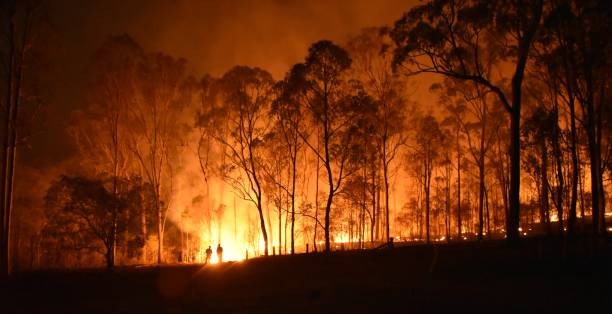
El Niño has been associated with a higher risk of drought, heatwaves, bushfires, and coral bleaching in Australia.
Most of the country's south has seen warmer-than-average temperatures as a result of the climatic event. Nine of the ten driest winter-spring seasons for eastern Australia have occurred during El Niño years.
El Niño's effects vary depending on its intensity and the region of the Pacific where it first appears. According to experts, El Niños that develop from warm surface water in the central Pacific are more likely to be linked to a lack of precipitation in Australia than those that develop from warmer water farther east.
Will El Niño worsen bushfires?
According to the BoM, the chance of a large fire hazard season is greatly increased after an El Niño year because of decreased rainfall and warmer-than-average temperatures. This has happened in the past during the summers of 2002–2003 and 2006–2007.
How do El Niño and climate change relate to one another?
2016 was the world's warmest year on record due to the final intense El Niño plus global warming.
El Niño and La Niña events have likely become more common and severe since the 1960s as a result of global warming brought on by greenhouse gas emissions, according to a study performed by CSIRO scientists in May of this year.
According to another studies, El Niño-driven flames can raise the atmospheric carbon dioxide concentration.
According to scientists, the danger of extreme fire weather has increased "by more than a factor of four" in Australia since 1900, and if global warming reaches 2C, bushfire crisis conditions are expected to increase eight-fold.
(Source: The Guardian)