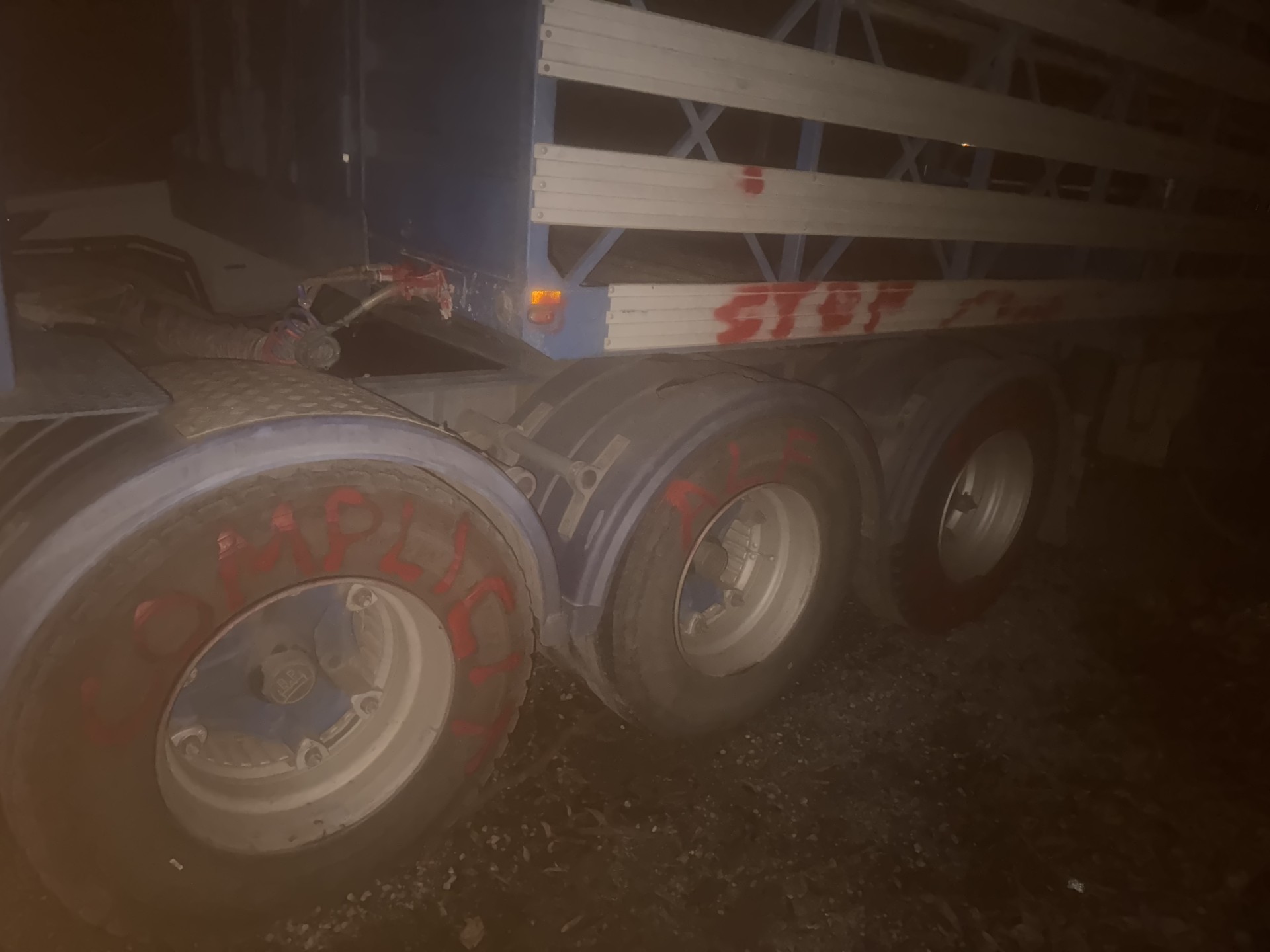
Livestock transporters are facing a disturbing rise in "vigilante" justice as animal rights activists escalate their attacks. In Southern New South Wales, a truck was severely vandalized near Wagga Wagga, causing an estimated $10,000 to $15,000 in damages. The NSW Livestock and Bulk Carriers Association issued a warning to drivers, urging them to stay vigilant after the attack left 15 tyres punctured, vital wiring damaged, and derogatory messages spray-painted on the vehicle. An emblem associated with the Animal Liberation Front (ALF) was found on the trailer, suggesting the group’s involvement.
The ALF later claimed responsibility for the attack on their website, detailing the extensive sabotage, which included cutting wires, drilling holes in tyres, and damaging essential components. They justified the destruction as a means to prevent the transportation of animals to slaughter.
The owner-operator of the affected truck expressed concern over the significant repair costs and loss of income while the vehicle was out of commission. “As an owner-operator, I depend on my equipment to earn a living. The damage is extensive, and the financial strain is overwhelming,” the driver stated. Authorities have yet to make any arrests, but the incident highlights a growing trend of vandalism targeting agricultural businesses. The rise in such actions has raised significant concerns about the safety and security of the livestock transport industry.
To help avoid becoming a target of similar attacks, livestock transporters can take several preventive measures:
- Increase Security: Installing surveillance cameras, motion sensors, and GPS tracking systems can provide a deterrent and help track down vandals if an attack occurs.
- Park in Safe, Well-Lit Locations: When possible, park trucks in secure, monitored areas or private property, especially overnight.
- Routine Inspections: Regularly check vehicles for signs of tampering, vandalism, or damage, especially after long stops or before and after each trip.
- Stay Alert on the Road: Keep an eye out for suspicious activity, and report any concerns to the police or local authorities immediately. Being aware of your surroundings can help spot potential threats early.
- Collaborate with Industry Groups: Stay in contact with industry associations and networks to share information and stay informed on best practices for security and prevention.
By taking these steps and remaining proactive, livestock carriers can better protect their equipment and livelihood from the growing threat of vigilante vandalism. It’s crucial for the industry to stay vigilant, not only for the safety of their operations but to ensure the broader agricultural sector remains secure in the face of such escalating threats. If you ever are a victim of these attacks call crime stoppers at 1800 333 000 or 000 ( FOR EMERGENCIES ONLY ).