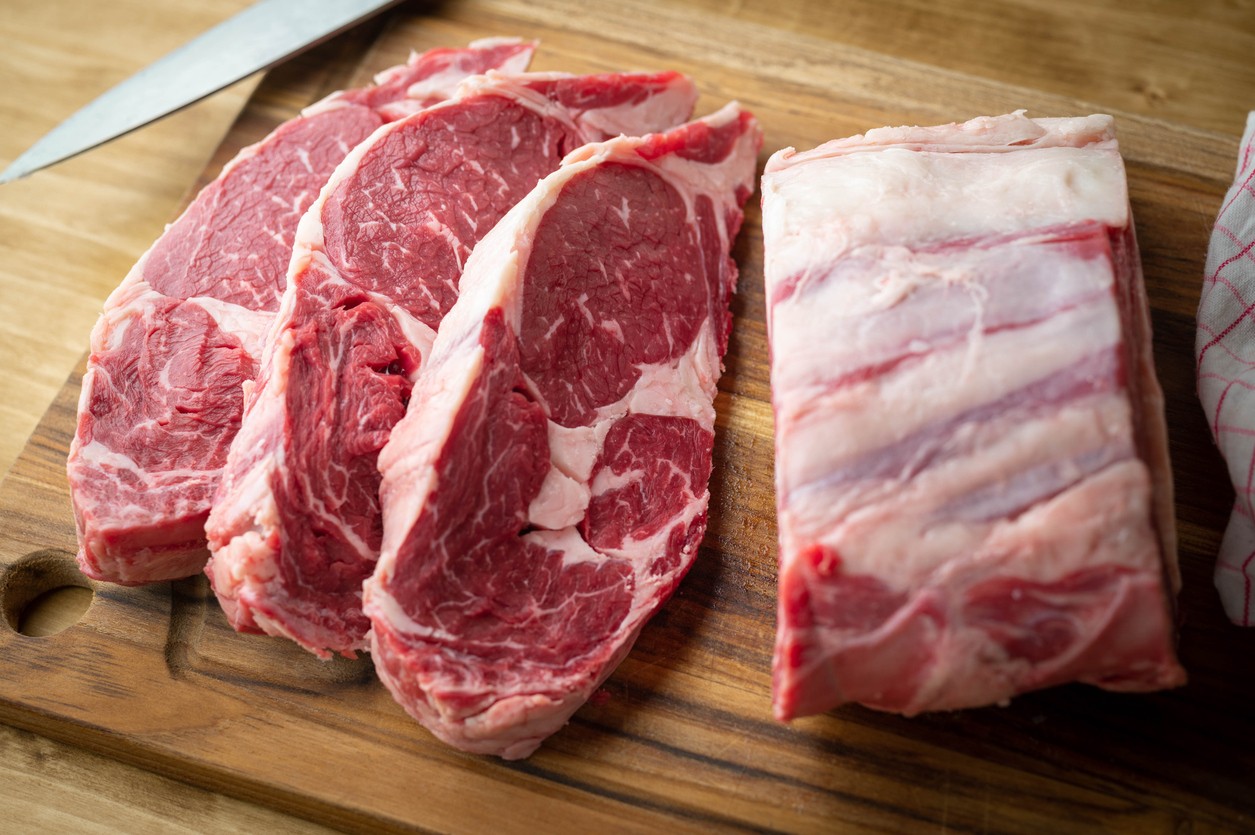
US President Donald Trump has dropped another bombshell on the global beef trade, announcing a 90-day tariff suspension on ground beef
imports to the United States.
In a post on Truth Social, Trump declared he had struck a deal allowing up to 300,000 tonnes of ground beef product into the US without
out-of-quota tariffs. His goal? To slash retail beef prices for struggling American families by 25 percent while giving the depleted US
cattle herd time to rebuild.
While targeted at cost-of-living pressure ahead of the upcoming US mid-term elections in November, the announcement has sent ripples through
global livestock markets.
So, what does this erratic move mean for us here in Australia?
1. This direct tariff impact just made a tougher playing field for Aussie producers
First, the good news: Australian beef exporters already enjoy tariff-free access to the US market under existing agreements, meaning Trump’s
tariff suspension doesn't hurt our direct duty status.
However, the sting lies in the competition. By temporarily removing the 26.4% out-of-quota tariff normally slapped on competitors like
Brazil, the US has essentially opened the floodgates for low-cost South American beef.
2. Brazil now gains the upper hand
Brazil is widely tipped to be the biggest winner from this policy shift. Having already filled its tiny 35,000-tonne US quota early in the
year and nearing its quota cap in China, Brazil was facing a steep 26.4% US tariff for the rest of 2026.
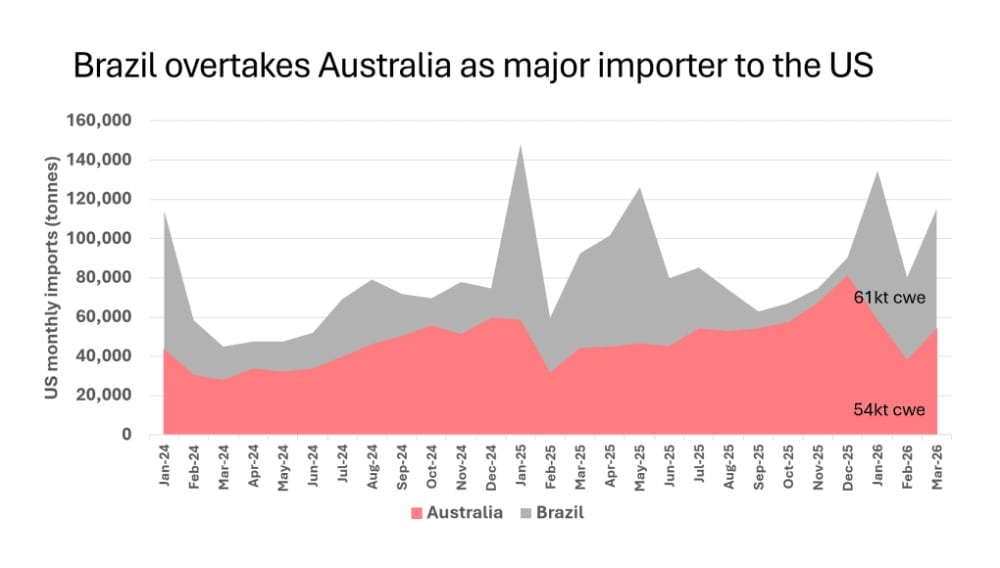
Now, with temporary tariff-free access to a massive 300,000-tonne window, cheap Brazilian lean trimmings are set to rush into the US market.
This influx of discounted beef will directly challenge Aussie lean beef trimmings which is a staple of the US hamburger market.
'%3E%3Crect x='0' y='0' width='1024' height='580' fill='%23f0e0e1'/%3E%3Cg transform='scale(4.00) translate(0.5 0.5)'%3E%3Cg transform='translate(145.43 94.32) rotate(87.64) scale(17.78 103.65)'%3E%3Cellipse fill='%23e64245' fill-opacity='0.50' cx='0' cy='0' rx='1' ry='1'/%3E%3C/g%3E%3Cellipse fill='%23f3ffff' fill-opacity='0.50' cx='61' cy='53' rx='97' ry='35'/%3E%3Cg transform='translate(224 89) rotate(269) scale(44 29)'%3E%3Crect fill='%23d36062' fill-opacity='0.50' x='-0.5' y='-0.5' width='1' height='1'/%3E%3C/g%3E%3Cellipse fill='%23fdffff' fill-opacity='0.50' cx='95' cy='144' rx='255' ry='34'/%3E%3Cg transform='translate(114.96 18.01) rotate(90.68) scale(2.28 81.55)'%3E%3Cellipse fill='%23728180' fill-opacity='0.50' cx='0' cy='0' rx='1' ry='1'/%3E%3C/g%3E%3Cellipse fill='%2396b2af' fill-opacity='0.50' cx='145' cy='78' rx='60' ry='10'/%3E%3Cg transform='translate(209.47 22.81) rotate(187.00) scale(94.80 45.78)'%3E%3Cellipse fill='%23fbffff' fill-opacity='0.50' cx='0' cy='0' rx='1' ry='1'/%3E%3C/g%3E%3Cpolygon fill='%23ff6a6f' fill-opacity='0.50' points='218,74 94,108 241,110'/%3E%3Crect fill='%23767a7a' fill-opacity='0.50' x='20' y='15' width='201' height='5'/%3E%3Cpolygon fill='%23d96d70' fill-opacity='0.50' points='42,73 44,110 78,109'/%3E%3C/g%3E%3C/g%3E%3C/svg%3E)
Image Source: Elders.
3. U.S. ranchers are furious and the market is nervous
American cattle producers haven’t taken the news sitting down either. The National Cattlemen’s Beef Association (NCBA) strongly condemned
the decision, warning that flooding the market with cheap imports undercuts local ranchers just as they try to rebuild herds hit hard by
drought.
Cattle futures in the US reacted immediately with sharp falls, creating market instability. For Australian producers, sudden price swings in
the US feedlot and slaughter sectors usually spill over into global trade sentiment.
What's next!
-
Don't panic. Australia's reputation for clean, green, high-quality, and reliable beef remains our greatest asset. US buyers still rely
heavily on Aussie product for consistent blending.
-
A sudden wave of cheap South American beef into America could put short-term downward pressure on global manufacturing beef values.
- Industry analysts caution that Trump’s trade policy moves often change quickly or get walked back as details emerge.
Here on Aussie home soil we know how much hard work goes into every head of cattle on your property. Whilst global trade headlines can
feel overwhelming, staying informed helps you make the right decisions for your herd and your bottom line.