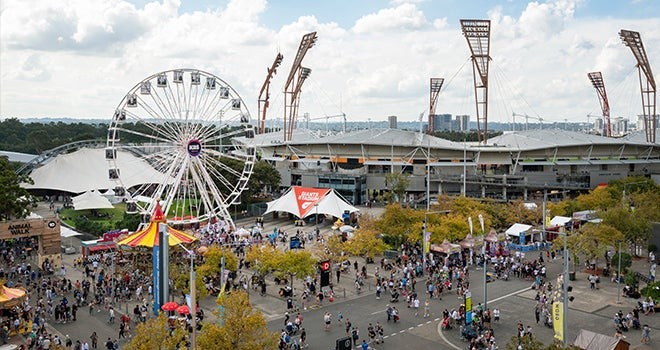
The 2024 Sydney Royal Easter Show concluded this week.
During the early part of the show, stud cattle from more than a dozen breeds were exhibited and judged, with animals from most Australian states receiving ribbons and acclaim.
The led steer and carcase classes are held in preparation for the stud beef judging at the Royal Easter Show in Sydney.
While much emphasis is placed on the parading and judging, a key benefit of the competition is access to carcase feedback data and, potentially, the opportunity to view the event as a snapshot, providing some points for breeders and others in the industry to consider and possibly address in the future.
In theory, the RAS of NSW Steer Competition provides a unique benchmark for seedstock breeders.
The Sydney competition requires that led steer entries be purebred only. Unlike other major competitions, where led steers are typically crossbreds and frequently bred with the goal of winning hoof and/or hook steer ribbons, the RAS competition allows bull breeders to directly compare how their purebred steers perform in various weight categories and against current MSA criteria.
While the feeding regime to which these animals have all been exposed determines many of the eventual outcomes, there are some useful pieces of feedback that can help shape genetic decisions.
Calculating Carcase Yield
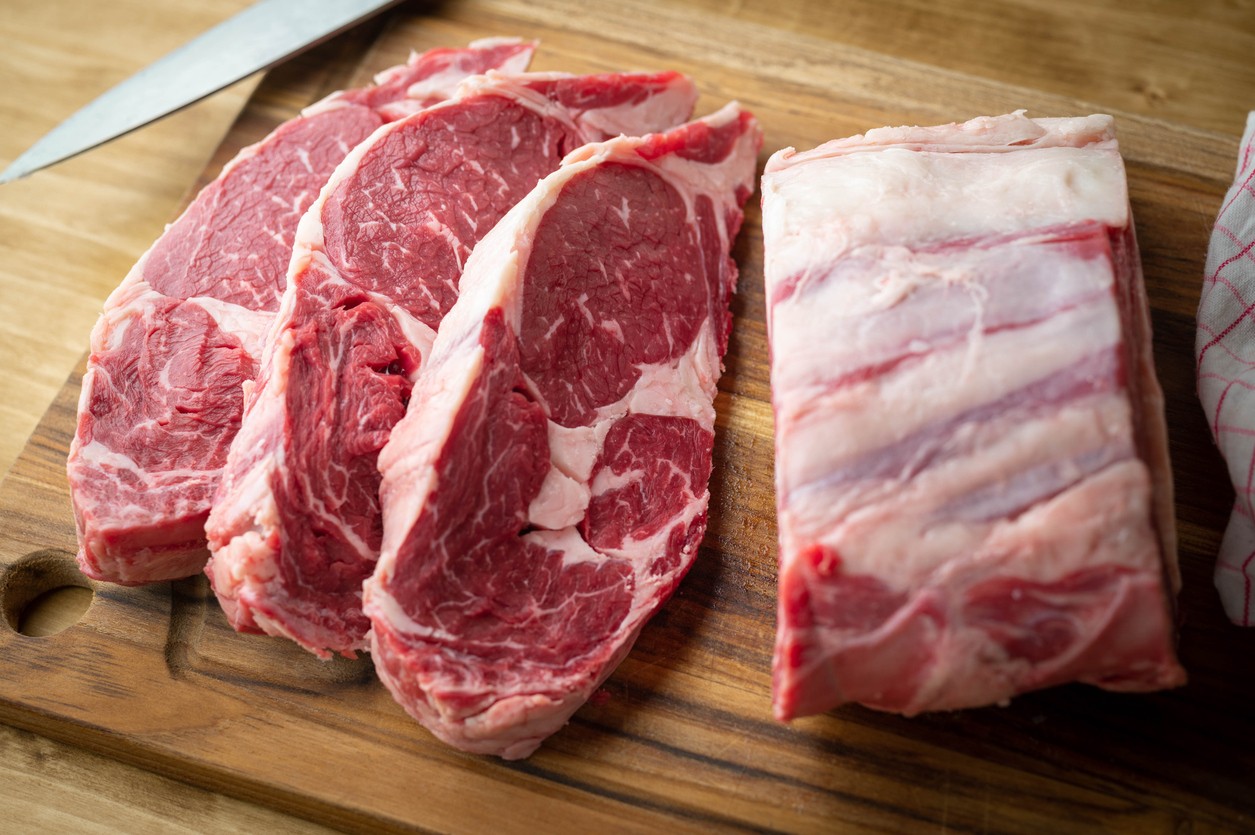
One of these is the percentage of lean meat yield for each animal. Lean Meat Yield (LMY%) is a percentage that describes how much of a carcase is lean meat (muscle) versus fat or bone. It is calculated using a predictive equation that takes into account hot standard carcase weight (HSCW), eye muscle area, and rib fat depth. Lean Meat Yield is expressed as a percentage (LMY%), making it independent of carcase weight variation.
More importantly, LMY% enables bull breeders, commercial producers, and processors to make standardised comparisons without the variation that can occur when using another yield calculation, Saleable Meat Yield%, which varies with cutting specifications and may include some fat. To increase Saleable Meat Yield, producers should increase the proportion of lean muscle in a carcase (LMY%) as well as the saleable meat in a carcase (SMY%).
According to national data, the range of Lean Meat Yield% for all MSA-graded steers was 51.6% to 62.9%. This range may not be surprising given the diversity of cattle breeds and backgrounds. Again, looking at the much smaller Sydney Show data set from 2024, the LMY% range was even wider, ranging from 51.36% to 66.11%.
All other traits being equal, that translates to 44kg more lean meat between two carcasses weighing 300kg each.
The potential takeaway value of this data for breeders, particularly those whose cattle have a lower LMY%, is the insight it provides into breeding selection decisions and the emphasis placed on muscling within the breeding herd and in sire choice.
Selection for increased muscle does not guarantee that subsequent generations of cattle will be larger or mature later. The NSW DPI's extensive research into muscle selection revealed that selection for muscling did not result in breeding females becoming larger or maturing later. In fact, their frame size shrank slightly as their muscle mass increased.
On a broader industry level, increasing Lean Meat Yield% allows producers to increase carcase value and, given some industry progress towards Value-Based Marketing, have a positive impact on overall enterprise profitability.
This is possible without increasing herd numbers or changing current stocking rates. While excessive LMY% can have a negative impact on overall MSA Index levels, the range between lower and upper LMY% recorded indicates that there is still room for producers to select and improve before most experience negative impacts on their eating quality index.
(Source: Beef Central)